Artificial Earthquake Wave Generation Based on Response Spectra for Seismic Qualification Testing
Mar 18,2026
1. Introduction
Earthquakes are characterized by sudden onset and high destructive potential, posing significant risks to buildings, mechanical and electrical (M&E) systems, and critical infrastructure. Ensuring the seismic reliability of such systems has become an essential requirement across multiple industries, including construction, healthcare, energy, and communications.
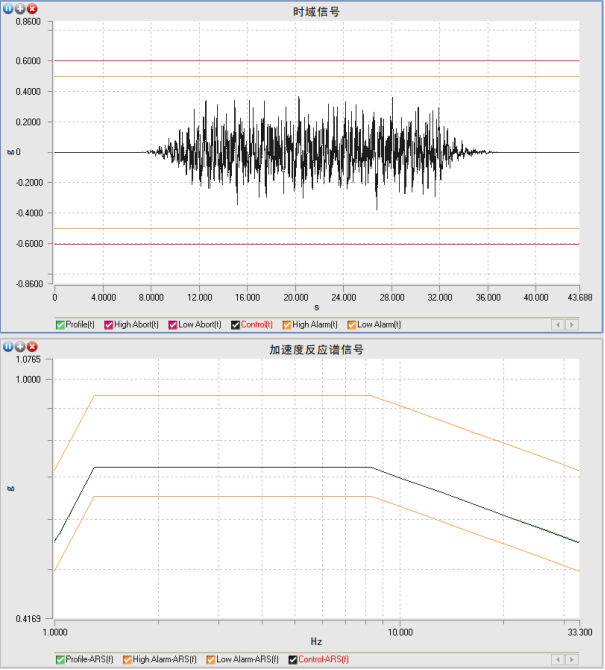
Shaking table testing is widely used to evaluate seismic performance under controlled laboratory conditions. A critical element of this process is the generation of artificial earthquake time histories that are compatible with specified response spectra. The accuracy and compliance of these input signals directly influence the validity and repeatability of seismic qualification results.
2. Response Spectrum–Based Artificial Seismic Wave Generation
2.1 Role in Seismic Testing
In seismic qualification testing, real earthquake records are often insufficient or unsuitable due to variability, lack of standardization, or mismatch with design requirements. As a result, artificial seismic waves are generated to match target response spectra defined by engineering standards.
The typical workflow includes:
• Definition of target response spectrum based on applicable standards
• Selection or initialization of seed time history
• Iterative spectral matching and adjustment
• Validation of generated waveform against tolerance criteria
This process ensures that the synthesized seismic input excites the test specimen in a manner consistent with expected real-world seismic demands.
2.2 Key Technical Requirements
Artificial seismic wave generation must satisfy several engineering constraints:
• Spectral Compatibility
The generated waveform must closely match the target response spectrum within defined tolerance bands.
• Time-Domain Realism
Waveforms should exhibit physically reasonable characteristics, including non-stationarity and appropriate duration.
• Stability and Repeatability
The generation process should produce consistent results across iterations and test scenarios.
• Compatibility with Test Systems
Generated signals must be directly applicable to shaking table control systems with minimal preprocessing.
3. Standards and Compliance Considerations
Seismic testing practices are governed by a range of international and industry-specific standards, which define requirements for response spectra, waveform characteristics, and testing procedures.
3.1 Building and Equipment Qualification Standards
Standards such as ICC-ES AC156 specify seismic qualification requirements for nonstructural components, including mechanical and electrical equipment installed in buildings. These standards define:
• Required response spectra based on design spectral acceleration parameters
• Acceptance criteria for shaking table testing
• Performance requirements during and after seismic excitation
3.2 Telecommunications and Infrastructure Standards
In telecommunications and related infrastructure, standards such as YD 5083-2005 and YD 5196.1-2011 define seismic testing requirements for equipment reliability. These standards emphasize:
• Functional integrity after seismic events
• Continuous operation under vibration conditions
• Compatibility with installation environments such as data centers
Compliance with such standards requires accurate generation and application of response spectrum–compatible seismic inputs.
4. Application in Critical Infrastructure and Emerging Technologies
4.1 Building M&E Systems and Medical Equipment
Artificial seismic wave generation is widely used in the qualification of building-mounted equipment, including HVAC systems, electrical cabinets, and medical devices such as imaging systems.
Accurate seismic simulation ensures that these systems maintain structural integrity and functional performance during and after seismic events.
4.2 Energy and Industrial Systems
Energy infrastructure, including power distribution systems and industrial equipment, requires rigorous seismic validation to prevent cascading failures and ensure operational continuity.
4.3 Data Centers and AI Computing Infrastructure
With the rapid expansion of data centers and high-performance computing systems, seismic reliability has become increasingly important for digital infrastructure. Servers and computing equipment deployed in critical environments must withstand seismic events without loss of functionality or data integrity.
Seismic testing in this context typically evaluates:
• Structural robustness under dynamic loading
• Functional continuity during and after excitation
• Long-duration vibration tolerance
Artificial seismic wave generation plays a key role in enabling standardized and repeatable testing for these applications.
5. Engineering Challenges and Practical Considerations
Despite its maturity, response spectrum–based seismic wave generation presents several technical challenges:
• Achieving accurate spectral matching across a wide frequency range
• Balancing time-domain realism with spectral compliance
• Managing computational efficiency for iterative algorithms
• Ensuring seamless integration with multi-axis shaking table systems
Advances in signal processing, optimization algorithms, and control integration continue to improve the fidelity and efficiency of artificial seismic wave generation methods.
6. Conclusion
Artificial earthquake wave generation based on response spectra is a fundamental technique in modern seismic qualification testing. By enabling controlled, repeatable, and standards-compliant input excitation, it provides a reliable foundation for evaluating the seismic performance of equipment and infrastructure.
As critical systems—from building equipment to digital infrastructure—become increasingly complex and essential, the role of accurate seismic simulation will continue to grow. Ongoing developments in waveform synthesis and testing methodologies will further enhance the ability of engineers to design and validate systems for resilient performance under seismic conditions.